This is a repost of our members guide to developing an impression of the Viking-age. An impression is the way in which we make, collect and combine reproduction clothing, objects and equipment to get a sense of what an early medieval person may have looked like and how they experienced the world.
We want to get the appropriate material culture1 that the people we represent to audiences would need or use for their role in society. It isn’t about accruing a stack of random, objects or bling.
We appreciate that a lot of people aren’t super nerdy and don’t want to develop an in-depth impression. They may just want to do battles, or go with the flow while they take in the historical vibes. That’s why we, and many other societies have a basic guide for costumes and objects! But, it’s such a worthwhile endeavour when you do get in to it, and it’s surprisingly easy to get started.

Research and What to Read
Before you can effectively create an impression that’s unique to you, you need some basic knowledge of the period. Knowledge of any period, and of the people in it comes from reading. Sure, you can watch some TV documentaries, or be told some facts by elder reenactors, and you can regurgitate them at the audience, but you’ll never get beyond surface information. And when considering the kinds of things that Vikings did everyday – the things that really make an impression work – then information from this sort of media will be difficult turn into a good kit, let alone it being explainable to audiences.
The good news is, you don’t have to read really deeply to get a good handle on things. Popular history books and history magazines are a great entry point. But, there’s so much more out there – here’s the types of things you get get, and what they’ll help you with:
Popular History – PopHist are books that serve as overviews and reviews of current scholarly works in easy to digest prose. These are great for new readers of the period to give you broad strokes on subjects like chronology, language, daily life etc. Most re-enactors can get by by only reading PopHist, and that’s ok! These books are often reprinted as inexpensive trade paperbacks, or discounted eBooks. Get your own copies of the latest ones.
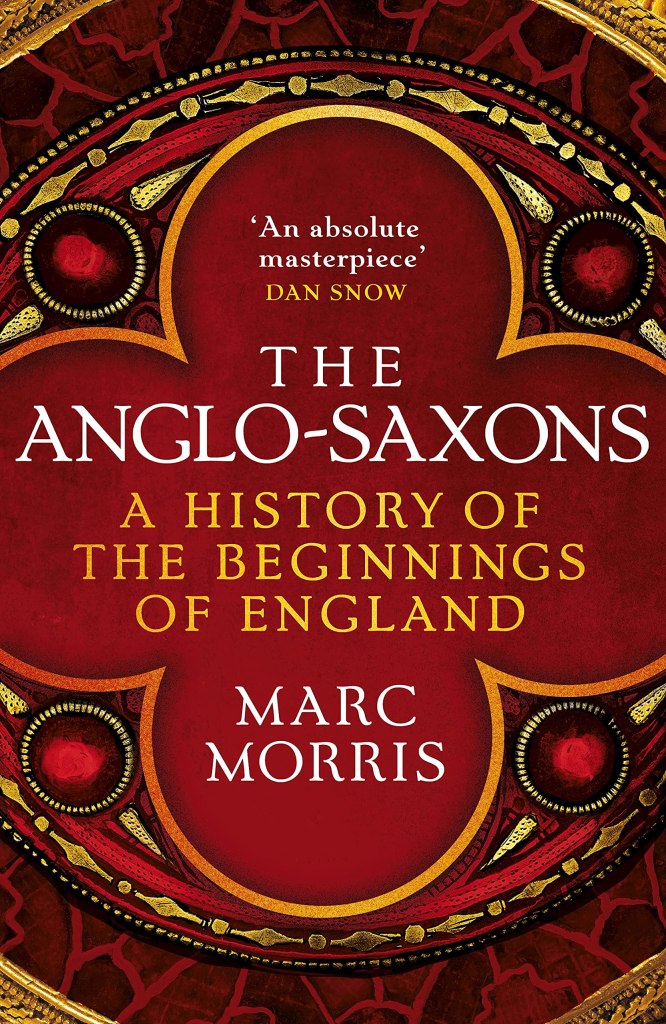
Eg. Neil Price’s Children of Ash and Elm, Eleanor Barraclough’s Embers of the Hands, Cat Jarman’s River Kings or Sally Crawford’s Daily Life in Anglo Saxon England to name a few.
Translations of period literary works – These are the things you want to read if you are interested in culture, status and the storytelling of the period. Get the most up to date, and get the ones with exhaustive notes. From the Icelandic sagas, to the Anglo Saxon Chronicles, to wills and charters, to psalters and gospels. They’re all good, depending on your interest. Prices vary, avoid the free Victorian translations you see online, except to compare. If you are a masochist and want to learn Old English, Old Norse, or another dead language, get an untranslated version….
Eg. Jackson Crawford’s Havamal, Larrington’s Poetic Edda, or Headley’s Beowulf.
Academic journals – These are a for more specialist reading where you find things like discussions and new arguments from topics ranging from studies of individual objects to broad cultural analyses. Often they’ll be summaries of, or contribute to work published in the academic press. Use the free tier or get a subscription to Jstor or Taylor and Francis etc., or scour Academia dot org for free stuff: but beware non-peer reviewed papers there (peer review is where other experts are invited to look over work before it’s published to check it for poorly formulated arguments). Many communities might host their own collection of papers – nerds look after nerds!

Academic press – This is where to find the most up to date thinking about a subject, but they are usually short run hardbacks by an academic/ university press and hard going for a layman. They’ll only do a few a year, expect to pay between £50-100 per volume. Get them while they’re hot. Or get a readers card at a university library. Sometimes these get released as fairly cheap eBooks. Really only buy these if you are really serious about researching things, or really need to know about a particular place/object/society.
Eg. Edinburgh Press Viking Age in Scotland or Oxford’s Anglo Saxon Farms and Farming, the Routledge Archaeologies of the Viking World series etc.
Archaeological monographs – A sub-category of the academic press, these focus on being a detailed study on one specialised subject. They are where the data lies and will include things like archaeological site reports, scientific analysis and discussion. If you want good pictures of finds, or good drawings of finds, and a discussion about that objects are, this is where they will be. These have very limited runs, older ones can be like rocking horse poo. But, quite a few are available for free on the Archaeological Data Service website, or as open access (ask your nerd community too!).
Eg. Dagfin Skyre’s Kaupang series, or YATs York Monographs
Trade history magazines – like Current Archaeology etc. are perfect for keeping up to date on latest stuff and they usually have inexpensive subscriptions.
Special Interest – There’s also a category in between popular history and academic books that are non-academic, but still quite niche. This is where books like Buried at Birka and Viking Dress Code live – resources that are great for re-enactors. Museum guides books that accompany exhibitions fit here as well I feel.
Eg. British Museums Viking: Life and Legend, the various ‘catalogue’ books edited by James Graham-Campbell etc.
Website – Websites can cover the gamut from Academic press to complete nonsense. We’ll cover how to ge the best out of web searches later in this post.
Historical Fiction – You’re not going to learn a lot of facts from these, but there’s nothing better than immersing yourself in the vibes of the period through dramatic retellings of stories, or characters wrapped up in historical events. If nothing else, they’ll remind you why you do this nerdy, silly stuff anyway!
Deciding on a Viking Impression
Who am I and what do I do?
The first step for developing an impression is using your basic knowledge of the Viking-age and thinking about what occupation the person you are representing would be working in. Perhaps you are a hunter, a potter, a fisherman, a smith — whatever. You don’t necessarily have to develop a craft, but you will want to think about what they would wear, what equipment they’d use, how they’d get about, and where they’d live. For female impressions, this might mean thinking about what kind of person you are married to, what the household would look like, and your status within the community. These will inform your purchasing or kit making decisions — your purchases should mirror your social status.


When am I from?
Fashion changed throughout the Viking-age, with new art styles, methods of construction, trade connections and political struggles that influenced everyday life. There are many movements within the 300-year span of the accepted Viking-Age, but for ease you can boil them down to three main ones:2
- Maritoria: 750-850 – Traditionally the start of the Viking Age in Europe, where the pressure of migrating peoples in the east, the result of limited farmland and growing population, and polygyny spurring wife-less men to seek prosperity elsewhere. This period sees the founding of the earliest emporiums at Hedeby, Ribe, Birka and Staraya Ladoga, and a permanent Viking presence in places like Dubin and Noirmoutier in the 840s. This is the period where Sea-Kings carve out opportunities, often violently in raids and petty conquests, to take plundered goods to market. This period will be the raiders, and the people affected by it.
- Hydrarchy: 850-950 – Vikings are here to stay. Great hosts — loose confederacies of lið under nominal leaders — make their winter camps permanent, and install puppet kings in conquered regions. The movement of large populations and wealth spur on trade through market kingdoms like Dublin, York, Ribe, Hedeby, Kaupang, Birka, Ladoga, Novgorod and Kiev. Contact with many different peoples, from the Strait of Gibraltar to the streets of Baghdad, bring new art, language and politics back to the Viking homelands.
- Diaspora: 950-1100 – Experiments in monarchy, and the conversion to Christianity cement the Vikings as part of European culture. The reaction to Viking raids and conquests has made new Kingdoms in England, in Ireland, and at home in Scandinavia. New worlds have been discovered, and safe access to Eastern trade mark the end of the Viking Age.
Where am I from?
Someone from the South of Denmark, where the Danevirke guards against the powerful European empires to the south would have a very different outlook to someone living on the isolated Faeroe Islands, or in the Norwegian Arctic Circle. They’d might have different styles of clothes and jewellery, specialisations restricted by the geography of their land, and perhaps opportunities based on their polity.
Understanding where your impression begins, and where it might end up means you can narrow down the search for objects to specific places and assemble an outfit with all the trappings of your trade based on the styles of the people and places most important to them.
How do I decide on these things?!
The best thing to do is read some popular history, or even some historical fiction to get a sense of who the people where and why they did what they did. Or maybe there was an object in a museum you really liked and you have been inspired about who may have owned it. These things can spark the ideas and get the ball rolling. Thinking of a trade and making a list of all the things you might need is a good starting point, then narrow it down to what’s realistic and achievable.
Like any collecting hobby, scope and costs can quickly spiral out of control (and remember you need to be able to bring things to events!), so take your time and develop your impression incrementally over several years.
Example: Fisherman (fiskari)
What kind of fisherman would be determined by his place in the world. Would he wade or take a boat out into the river and catch fish in a net, with a trident or harpoon, or in wicker traps? Or does he live on the coast and fish for herring, oysters and crabs? Does he sell his surplus to townsfolk at the market? He would need warm, rugged clothing, headwear to protect him from the sun, and baskets to keep his catch. He might forgo trousers and wear breeches, or just cover his modesty with a long kyrtle. On his belt, he would need a knife and a hone. A leather or ceramic flask will keep him hydrated during the long hours on the water, and a wallet or sack will be useful to pack spare dry clothes, bait (in a pottery jar), or lunch (eg. dried meat, fruit). He’ll need nets, net-making shuttle, line and hook, floats, bait, fishing spears, eel traps and more.
Example: Dairymaid (deigja)
Some women were in charge of creating and storing food for the family. They tended and milked the animals, made skyr and churned butter, kept whey and cheese; they cooked, baked and brewed ale and mead. The fact that the woman of the house was in charge of these very important commodities gave them significant power. A milkmaid’s outfit might require warm, practical clothing, such a cap to keep hair out of the product, mittens to keep your hands warm on cold days, and a number of bits of household equipment: ceramic jars, cheesecloth, spoons, spurtle/tvare, butter churn, buckets and yoke to carry them, fire-lighting equipment (flint/steel/tinder and bark tinderbox), bowls, and wicker baskets. She might also have a set of clothes and accessories for best.
When we get a sense of the objects they need to dress and do their craft, then we can look for examples in the archaeological record from the time and region we have chosen.
Where to find information – The Sources for Viking Research
First! Costume Passport
Once you have thought about and explored an impression on paper, it’s time to buy or make your kit, appropriate to your chosen date, region and persona. For example, a fisherman from the east-Irish coast may have slightly different things than a fisherman from the gentle river flows of Wiltshire.
To do this, you will need to research items that will be appropriate for the impression: what shoes were available in that area, how did they fasten their cloak in place, were their fishing hooks different etc.?
You will also have to navigate the fact that there may be gaps in information and make an educated guess, using the expertise of scholars.
To help organise your information and document each item appropriately, download the costume passport from Projekt Forlog.
It’s a form you can fill out with information and pictures you collect, and gives others (for example, a society officer, or fellow nerd) a chance to look over it before you spend loads of money and end up disappointed when you’ve bought something that isn’t period appropriate!
To see an example of a completed costume passport, check out this one from group member Þorunn.


Using Websites for Viking Reasearch
I’m going to suggest that most people are going to Google what they want, and this is a good start for research, but when you Google things like ‘Viking costume’ or ‘what the Vikings wore’ or similar, you are going to have to do some pretty critical thinking. (I’ll cover Google searching later).
Once you get past the shopping links, AI generated slop, primary school curriculum nonsense and TV cosplay stuff, you might get more useful links to museums, blog posts by researchers or reenactors, or similar. But even then, you have to be careful.
What we need to find is authority and references: references to museum catalogue pages, references to published work, figures with detailed captions that includes references, and respected outlets known for research (authority) etc.
I would avoid using LLMs like ChatGPT for research because the way they work is by aggregating content based on predicting words. This strips any context or nuance from an author’s arguments or findings, things that are crucial to collecting together different object together in a coherent way. (LLMs also aren’t terribly picky about what sources they use as long as they sound good…)
Why is this important?
It’s so we can verify whether the information is accurate and appropriate, and that the author has done the legwork and not just copied someone elses homework. If there’s lots of references to authoritative work (by archaeologists, historians and specialists) then we are more likely looking at something that we can use. What we are looking for is:
- Source Credibility: Are the sources used reliable and credible?
- Evidence Quality: Does the evidence presented support the claims made?
- Evidence Relevance: Is the evidence relevant to the argument?
- Counterarguments: Does the work acknowledge and address counterarguments?
- Is the work presented within the appropriate context? (Ie. does the author discussing coins suddenly veer off into clothes – do they have authority in the subject you’re looking for?)
Let’s take a look at some popular websites with a search term about ‘what the vikings wore‘ and evaluate their usefulness.

Hurstwic is one of the top hits for this search term. Their article is well written and includes lots of pictures, including some that look like illustrations of archaeological finds. It’s perfect for general interest in the topic. However, there is no list of sources to back up their claims or authoritative language. The information may be accurate, but they leave it up to you to prove it. This might serve as a starting point for further Googling – knowing the names of items is a good start, but shouldn’t be used as a buying guide.

This is from the Viking Ship museum in Denmark, which should have a certain amount of authority, but there are also no sources included. This is where you need to discern the audience: it’s probably aimed at children and general interest rather than someone recreating clothing from archaeological evidence!

At first glance, the article on this online shop looks useful as it includes Norse terminology. But as you read there’s a worrying mix of hedging language and certainty that shows it’s pulled from two very different sources. And those sources are not listed, so you can’t check the information against them. Useful for people interested in fancy dress and learning somd terms, but not to the standard you’d probably expect for recreating historical clothing.
This page from our own blog has loads of information and uses specific terminology in an authoritative way, and includes a huge list of sources. However, the sources aren’t connected to the main body of the text, so it would take some real effort to verify every ‘fact.’ This kind of article is a good starting point, but not research in of itself. You shouldn’t just expect this to be accurate.3

This article from Projekt Forlog on the other hand has plenty of authoritative information with inline links to the sources used, so any claims or arguments they make can be checked against that work. Given the care they use, you can probably just expect this to be accurate – certainly enough for your dressing-up hobby!

This is a super blog by the Eoforwic Project, where someone is doing exactly what you are trying to do – creating impressions of the past. While being a personal blog, it includes inline references to the sources they use and their own reasoning, so you can check against the relevant literature if needed.
The point is not to discount every article because it doesn’t have academic quality referencing, it’s just that you should read from the critics point-of-view and think deeply about what you are looking at. These sorts of pages should lead you on to more specific web searches, or into papers and journals that details and discuss the things you want.
The same goes for information found in Facebook groups, forums or Discord channels – sniff out what looks like a good source and follow that thread to the object, or the interpretation by professionals in the field.4
Googling
Evaluating sites is important, but it’s actually really hard to find quality sites in the first place. Thanks to Pinterest, AI content farms, sponsored listings etc., etc., Google results aren’t what they used to be.
Let’s start with a search for viking jewellery. Then, throw it away, because it’s a garbage search that’s far too broad. Consider what you’re looking for more carefully, and include that in the search.
- Are you looking for reproductions/replicas to buy?
- Are you looking for archaeological reports on something?
- Are you looking for an overview of the styles in one area?
- Looking for specific items found in one place?
Narrowing things down is awesome, and there’s a few methods, obviously the first is gonna be adding more keywords.
If we pretend I’m looking for glass beads from Birka, then glass beads from birka is a hell of a good start. However, this is going to come up with a lot of sites selling glass beads that may or may not have anything to do with Birka.
So we can start adding search operators, which are cool little bits that Google (and other search engines) uses to treat your search differently.
One of the very best ways is to add inurl:pdf or filetype:pdf at the end of your keywords as these will bring up results that are PDF files — typically press releases, archaeological reports etc., so that query would be glass beads from birka filetype:pdf.
To narrow results down, we can use quotation marks to force results that include the specific term.
“glass beads from birka” would ONLY return results with the exact phrase ‘glass beads from birka’ in that order, which is probably not that many.
“glass beads” from “birka” is a better option, which will return searches that include ‘glass beads’ AND ‘birka’.
So if we wanted to find PDF files that mention glass beads from Birka, “glass beads” “birka” inurl:pdf would be a good option.
We might then realise that quotation marks are so horribly specific that “glass bead” is different to “glass beads”.
So, we can use an OR operator: “glass beads” OR “glass bead” “birka” inurl:pdf.
glass beads from birka has 584,000 results.
“glass beads” OR “glass bead” “birka” inurl:pdf has 2030 results.
We can further narrow this down by adding our most important keyword in an intitle operator:
“glass beads”OR”glass bead” “birka” inurl:pdf intitle:birka has 8 results.
This query means the title of the PDF document must contain the word “birka”, and either the phrase “glass bead” or “glass beads” at least once.
Unfortunately, glass beads may only be mentioned once in the document but that’s where the human side comes in: Ctrl+F (cmd+f on Mac) is find within a page, get searching.
Other cool operators that are kind of useful:
- viking glass beads -hedeby will bring up results without the word ‘hedeby’
- viking glass beads -shopping removes shopping results.
- viking glass beads -pinterest is basically essential: it removes pinterest results!
- You can search on a particular site by using the site operator: site:website.com “clothing guide” filetype:pdf
- If there’s an old broken link, you can use the cache operator: cache:website.com/linky.php (or use the Wayback Machine)
Also, consider using an alternative search engine like Duck Duck Go or Kagi for different results.
A lot of searches these days have an AI summary. These usually aggregate multiple sources together without context, producing a jumble of random content. Don’t trust these for anything more than basic information.
Using Academic Works
Internet research is great – there is so much stuff online. But the best stuff is peer-reviewed papers by experts working in the field. There are many online repositories that serve this kind of content: academia.org, Jstor, Taylor and Francis to name just a few. Many books and papers are open access, so you can get them for free, or they have free trials.
As with the quality of sources of websites, when you look at academic papers, you still need to look for:
Source Credibility:
- Are the sources used reliable and credible?
- Evidence Quality: Does the evidence presented support the claims made?
- Evidence Relevance: Is the evidence relevant to the argument?
- Counterarguments: Does the work acknowledge and address counterarguments?
- Is the work presented within the appropriate context?
The main thing in academic papers is that the authors have already done the legwork for you: evaluating primary sources (ie. archaeological finds) and using secondary sources (books and previous works) to make their argument or frame the discussion.
They are generally far more trustworthy than some random internet blog, however well written (although not always – you still have to use your brain!)
Getting things made
The other part of building an impression is actually where to get stuff from. Many items are entirely within your skills, even if you don’t think so: sewing is remarkably easy to get into and to get good at. I started making a hat, a bag, a tunic, and since have made full sets of costume across a bunch of different historical periods. It’s worthwhile having a go!
But, I also appreciate not everyone is so inclined. So, who to buy from? If you join a group, they may have recommended traders, or people with the skills to make stuff for you. Finding traders is much the same as Googling for artefacts and you need to apply the same critical eye on traders as you do on sources:
- What are they copying (place, find, museum entry)?
- Is it made the same way, with the same materials?
- Is it ‘in the style of’ rather than a copy?
If they don’t list the place, or properly reference what a reproduction is based on, I’d avoid. In the early days of my reenactment career (a spotty, skinny teenager), the amount of things that I bought because the trader claimed that it was ‘from Birka’ was ridiculous. Even if they do list details like grave number or museum reference etc., give it a Google, or compare to your researched images to corroborate.
What you may find is that there are traders who are just as invested in research as you are and will document their process from object to reproduction. These are the best!


Bringing it all together
Developing an impression isn’t about owning the most kit, spending the most money, or having every answer memorised. It’s about being curious and following a thread of interest. Whether that’s a warrior from Birka or a far travelled explorer from Iceland, or a particularly cool brooch you spotted in a museum: see where it leads you. Every book you read, every object you make, every paper you skim over with a cup of tea in hand helps build a richer picture of the people we’re trying to understand and represent.
Don’t feel pressured to get everything right immediately. None of us started with a perfectly researched impression, and most of us are still changing and refining ours years later as new discoveries are made and new ideas emerge. The joy is in the process: reading things, making things (buying things! 😅), asking questions, arguing about obscure details and occasionally discovering that the thing you’ve just spent six months making is actually from the wrong century!!
So pick a person, pick a place, pick a story, and start somewhere. Read a book. Visit a museum. Make a hat. Fall down a rabbit hole about lead weights or cheese-making or glass-bead production. Before long you’ll find that your impression has grown from a collection of clothes and objects into something much more interesting: a way of understanding how people lived, worked, travelled, worshipped, traded, fought, loved and endured over a thousand years ago.
And if all else fails, remember: every expert was once a newcomer with an oversized tunic, a borrowed knife, and absolutely no idea what they were doing.
Footnotes
- Material culture can be described as any object that humans use to survive, define social relationships, represent facets of identity, or benefit peoples’ state of mind, social, or economic standing. It includes the usage, consumption, creation, and trade of objects as well as the behaviors, norms, and rituals that the objects create or take part in. For us, it’s the things we reproduce from archaeological evidence to present an impression of the past. ↩︎
- As described in ‘Children of Ash and Elm’ by Neil Price. ↩︎
- I Tried my best 😂 ↩︎
- And, y’know, do a blog about it so other reenactors can benefit too! ↩︎